
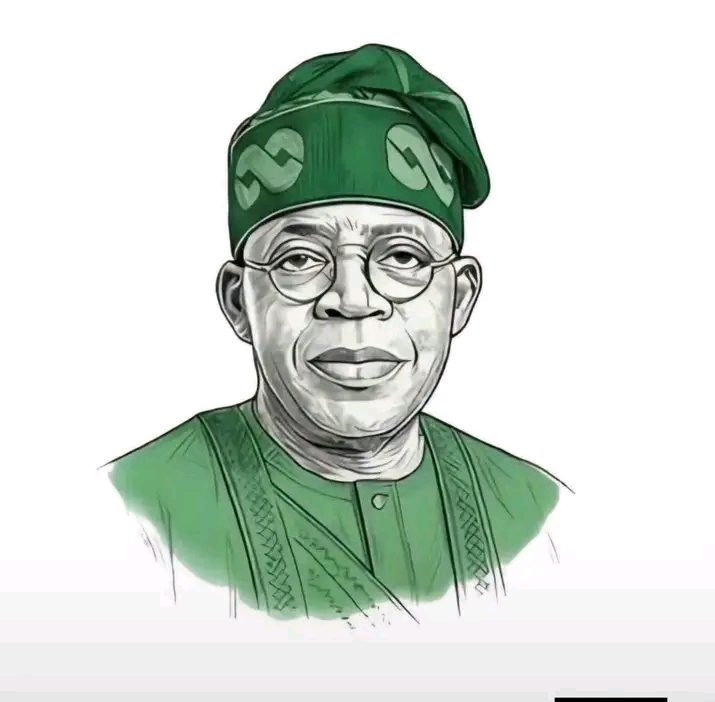
KADUNA IS NO CRIME SCENE: BOBai DISMANTLES DOKA'S NARRATIVE, LISTS TINUBU'S PROJECTS, DEFENDS UBA SANI 'I Have Served Under Different Kaduna Admini
KADUNA IS NO CRIME SCENE: BOBai DISMANTLES DOKA’S NARRATIVE, LISTS TINUBU’S PROJECTS, DEFENDS UBA SANI
‘I Have Served Under Different Kaduna Administrations; I Know Excellence When I See It. Tinubu’s Campaign Flag-Off Is an Economic Opportunity and a Strategic Political Statement’
By Hon. Victor Mathew Bobai
Mohammed Bello Doka’s article, “Projects in Lagos, Campaign in Kaduna Amid Insecurity: What Will Tinubu Promise Now?”, is an exercise in selective analysis that attempts to turn Kaduna State’s security challenges into a sweeping indictment of President Bola Ahmed Tinubu and Governor Uba Sani.
By concentrating on tragic incidents while overlooking documented federal interventions, ongoing infrastructure projects, educational investments, and the Kaduna State Government’s development initiatives, Doka presents a narrative that is incomplete and politically loaded.
His description of Kaduna as a “crime scene” is particularly objectionable. Kaduna is a historic political and economic centre of Northern Nigeria, a state of enormous agricultural and commercial potential, and home to millions of citizens whose lives cannot be reduced to insecurity statistics.
Let us establish one fundamental fact: acknowledging Kaduna’s security challenges does not require pretending that nothing is being done to address them. Equally, supporting the government does not mean denying the tragedies that have affected our communities.
What is unacceptable is the attempt to use those tragedies to dismiss every achievement, every intervention, and every opportunity for progress.
As a public affairs analyst and Senior Special Assistant on Public Affairs to Governor Uba Sani, I consider it necessary to respond to Doka with facts, historical context, and an examination of the political and economic realities he appears to have overlooked.
I have served in Kaduna’s public affairs environment under successive administrations, including those of Ahmed Makarfi, Arch Namadi Sambo, the late Patrick Ibrahim Yakowa, and, to some extent, Ramalan Yero. My experience has exposed me to different approaches to governance, political inclusion, security management, and public administration.
I have witnessed Kaduna’s political evolution firsthand.
I know excellence when I see it, and I know the difference between constructive criticism and a narrative designed to discredit a government without examining the full evidence.
1. TINUBU’S KADUNA PROJECTS: THE FACTS DOKA MUST CONFRONT
The claim that President Tinubu has neglected Kaduna cannot be adequately assessed without examining the federal government’s projects and interventions in the state.
The record includes important developments in higher education, federal infrastructure, road construction, and regional connectivity.
The Tinubu administration empowered the Federal University of Education, Zaria (FUEZ), to commence its undergraduate degree programmes and academic activities for the 2025/2026 academic session following approval by the National Universities Commission (NUC).
Federal University of Applied Sciences, Kachia
On February 11, 2025, the Presidency announced that President Tinubu had directed the Federal Government to take over Nok University in Kachia and transform it into the Federal University of Applied Sciences, Kachia.
The development is particularly significant for Southern Kaduna, where access to higher education and opportunities for scientific and technological training remain important development priorities.
The Presidency also acknowledged Governor Uba Sani’s role in advancing development in Southern Kaduna and highlighted the need for federal-state cooperation on infrastructure.
This is documented evidence of a federal intervention in Kaduna, not an invented campaign promise.
The Kaduna–Mando–Birnin Gwari Road: A Major Federal Infrastructure Commitment
On August 4, 2026, the Federal Ministry of Works announced the flag-off of the reconstruction of the 122-kilometre Kaduna–Mando–Birnin Gwari Road.
The project is important because the corridor connects communities, supports agricultural movement, facilitates trade, and links areas that have experienced serious security and accessibility challenges.
The Federal Ministry of Works described the project as part of the Tinubu administration’s infrastructure programme, linking road development to economic growth, regional connectivity, and security.
Governor Uba Sani represented the President at the groundbreaking ceremony and conveyed the Federal Government’s commitment to the project.
The significance of this road goes beyond asphalt. Better connectivity can help farmers transport produce, traders reach markets, residents access public services, and security agencies move more effectively between locations.
The Kaduna–Kano Railway: Regional Connectivity and Economic Potential
The Kaduna–Kano section of the wider railway corridor is another important federal infrastructure project.
During a project inspection reported by the State House on May 2, 2026, officials indicated that the Kaduna–Kano section had reached approximately 68 per cent completion, with work remaining on critical infrastructure, including a bridge connecting the Rigasa and Afaka-Mando axis.
The reported target at the time was completion by December 2026.
This is an important qualification: the railway was not yet complete at the time of that report.
Nevertheless, the project has the potential to improve passenger movement, support commercial activity, and strengthen transportation links between Kaduna and Kano.
For a state whose economic influence extends across the Northwest, improved railway connectivity is strategically significant.
The Federal Government’s Broader Infrastructure Programme
Kaduna also stands to benefit from the wider federal infrastructure programme, including road investments intended to improve regional connectivity.
The evidence above demonstrates that the federal government’s relationship with Kaduna includes substantive infrastructure and educational commitments.
Doka is free to question the adequacy of these interventions, but he cannot responsibly dismiss them without examining their scope, implementation, and expected benefits.
If the argument is that the Federal Government has abandoned Kaduna, the burden is on the critic to confront the documented projects and explain why they do not constitute meaningful federal engagement.
2. GOVERNOR UBA SANI’S ACHIEVEMENTS: KADUNA IS MORE THAN ITS SECURITY HEADLINES
While Doka concentrates on federal responsibility, he also overlooks the development initiatives being pursued by Governor Uba Sani.
The Kaduna State Government has reported progress across roads, healthcare, agriculture, skills development, investment, and social protection.
These are state-government achievements and should not be wrongly attributed to President Tinubu. Equally, they should not be excluded from an honest assessment of Kaduna’s overall development.
More than 1,300 kilometres of road projects
In an official statement published on April 19, 2026, the Kaduna State Government reported that Governor Uba Sani had initiated approximately 150 road projects covering more than 1,300 kilometres across all 23 local government areas.
The government said the programme was intended to improve connectivity between rural production centres and urban markets, reduce travel time, and stimulate commercial activity.
These projects are important because roads connect farmers to buyers, businesses to customers, communities to healthcare facilities, and students to educational institutions.
The state’s reported road programme also challenges the notion that Kaduna’s development conversation begins and ends with insecurity.
The number of projects and their reported coverage should, of course, be assessed alongside project-level completion records, quality standards, and the benefits delivered to residents.
Healthcare: 255 upgraded primary healthcare centres and a 300-bed specialist hospital
According to the Kaduna State Government’s April 2026 account, the administration had upgraded 255 primary healthcare centres to Level-2 facilities and established 23 Centres of Excellence, one in each local government area.
The government also reported the delivery of a 300-bed specialist hospital intended to expand access to advanced medical services within the state.
These initiatives address a fundamental development concern: residents should not have to travel unnecessarily long distances or incur excessive costs to access essential healthcare.
A specialist hospital and improved primary healthcare facilities can complement one another by expanding local treatment capacity and strengthening access to medical services.
The 300-bed hospital is a Kaduna State Government achievement, not a federal project. The distinction matters because public accountability requires us to recognise which administration is responsible for each intervention.
Agricultural investment and rural livelihoods
The Kaduna State Government also reported a substantial increase in its agricultural budget, from approximately ₦1.48 billion in 2023 to more than ₦74 billion in 2026.
The government said it had distributed more than 900 trucks of fertiliser to farmers and enrolled over 100,000 smallholder farmers in crop insurance schemes.
It also identified Special Agro-Industrial Processing Zones in Chikun and Kubau as part of its strategy to move agriculture beyond subsistence production towards processing, value addition, and expanded commercial opportunities.
These programmes are relevant to Kaduna’s security and development challenges because agriculture remains an important source of livelihood for many households.
Farmers need security to cultivate their land, roads to transport produce, access to inputs, and markets that reward their labour.
No one should suggest that agricultural investment alone can eliminate insecurity. But neither should an analyst dismiss agricultural development when examining the long-term conditions required for rural stability and economic recovery.
Investment and economic activity
The Kaduna State Government reported that 23 investments valued at more than US$743 million had been actualised between 2023 and 2025.
It also reported an investment pipeline of approximately US$2.77 billion.
Nevertheless, they identify the administration’s stated economic direction: attracting investment in agriculture, manufacturing, energy, and other sectors.
For Kaduna, the challenge is to convert investment commitments into productive enterprises, sustainable employment, stronger local supply chains, and improved household incomes.
That is the development conversation that should accompany discussions of insecurity.
Governor Uba Sani’s administration should be held accountable for delivering these outcomes, but its economic initiatives should not be erased from the public record.
3. THE FEDERAL-STATE PARTNERSHIP IS PART OF KADUNA’S DEVELOPMENT STORY
One of the weaknesses in Doka’s article is its tendency to frame the Federal Government and Kaduna State Government as though the performance of one must be assessed in isolation from the other.
In practice, many development outcomes depend on cooperation between the two levels of government.
The Federal Government controls major national responsibilities, including defence, federal highways, and federal tertiary institutions. The state government has its own responsibilities in healthcare, education, local infrastructure, agriculture, social protection, and community engagement.
Their responsibilities overlap in areas such as security coordination, transportation, investment, and regional development.
The conversion of Nok University into the Federal University of Applied Sciences, Kachia, illustrates federal action supported by engagement with Kaduna stakeholders.
The Kaduna–Mando–Birnin Gwari Road illustrates federal infrastructure investment with the state governor participating in the process.
The state’s road and healthcare programmes demonstrate areas in which the Kaduna Government has pursued its own development priorities.
These are different interventions, but together they form part of the broader development picture.
The proper question is not whether every project belongs to Tinubu or Uba Sani. It is whether the respective governments are fulfilling their responsibilities and whether Kaduna’s people are benefiting from their cooperation.
That is how serious governance analysis should be conducted.
4. SECURITY: KADUNA MUST BE COMPARED WITH ITS OWN HISTORY
Doka’s references to the Tudun Biri tragedy, kidnappings, attacks on communities, and other painful incidents deserve serious attention.
The families affected by these events deserve compassion, justice, and effective government action. Their suffering must never be trivialised.
But the existence of these tragedies does not establish that every government intervention has failed or that Kaduna has made no progress.
Kaduna entered Governor Uba Sani’s administration with substantial security challenges and deep divisions among some communities and political stakeholders.
Under the preceding administration of Nasir El-Rufai, communities in different parts of Kaduna experienced severe insecurity, including attacks, kidnappings, and disruptions to farming and movement.
For many residents, insecurity became a daily fear that affected livelihoods, education, travel, and economic activity.
It is therefore legitimate to assess whether the present administration has improved the conditions it inherited.
Governor Uba Sani has pursued stakeholder engagement, reconciliation, inclusive governance, and cooperation with federal security institutions. These are important elements of a broader effort to strengthen peace and stability.
King
The point is straightforward: security must be evaluated through evidence, not by selecting incidents that support a preferred political conclusion.
Kaduna has not become free of insecurity, but its challenges do not justify pretending that the work of peacebuilding, stakeholder engagement, and development has no value.
5. WHY THE OCTOBER 24 CAMPAIGN FLAG-OFF IN KADUNA IS STRATEGIC
President Tinubu’s presidential campaign flag-off is scheduled for October 24, 2026, in Kaduna, according to the reported announcement by APC Presidential Campaign Council Director-General Senator Abdulaziz Yari.
The Kaduna APC has also publicly welcomed the decision, describing it as recognition of the state’s political importance and the President’s engagement with Northern Nigeria.
This decision should be examined through political, economic, and security considerations rather than reduced to a question about whether Kaduna has experienced insecurity.
Governor Uba Sani has been involved in discussions surrounding the campaign arrangements. His role as governor and a key APC stakeholder makes his participation in the state’s preparations politically significant.
If the objective is to mobilise support across the Northwest, Kaduna is a logical location.
Kaduna has a long-established role as a political, administrative, educational, and commercial centre. Its proximity to Kano and connections to other Northwest states make it an important meeting point for political stakeholders.
The campaign is therefore not simply a rally in one state. It is an opportunity to engage a strategically important region.
Kaduna is a major electoral centre
Kaduna is nevertheless one of Nigeria’s significant electoral centres, and the APC has a rational interest in engaging its voters and political structures.
The presence of Governor Uba Sani, Speaker of the House of Representatives Tajudeen Abbas, General CG Musa , Minister of Defence, other prominent political figures from the state reinforces Kaduna’s relevance to the national political conversation.
The Minister of Defence, General Christopher Gwabin Musa, also has national prominence and a direct institutional responsibility concerning the country’s security architecture.
These relationships be treated as a guarantee of electoral outcomes, because they are relevant to understanding why Kaduna matters to the APC’s campaign planning.
The economic benefits of hosting a major national event
A presidential campaign of this scale can generate increased demand for accommodation, transportation, food, printing, event management, media services, and other local businesses.
Hotels may receive additional bookings. Restaurants and food vendors may experience higher demand. Transport operators may benefit from increased passenger movement. Suppliers, event planners, and service providers may receive new business.
Temporary employment and commercial opportunities may also arise.
For a state seeking to strengthen its economic profile, hosting a major national political event provides an opportunity to showcase its hospitality, institutions, business capacity, and strategic importance.
Instead of asking why Kaduna was selected, serious analysts should also ask how the state can maximise the economic opportunities that come with hosting the event.
The campaign offers an opportunity for direct security engagement
There is another important consideration.
The presence of the President, senior federal officials, governors, legislators, and security leaders creates an opportunity for high-level discussions about Kaduna’s security challenges.
Governor Uba Sani and other state stakeholders can use the occasion to press for practical measures, stronger operational coordination, and continued federal attention to vulnerable communities.
Such engagement could help bring local security priorities directly before senior decision-makers.
However, the occasion will be properly coordinated, it can provide a useful opportunity for discussions about security, federal-state cooperation, and the protection of residents.
Doka’s argument overlooks this possibility.
6. WHY GOVERNOR UBA SANI’S POLITICAL FORESIGHT MATTERS
Governor Uba Sani’s role in discussions surrounding the campaign should be viewed within the context of his wider responsibility to position Kaduna as an important centre of national engagement.
A governor who can attract national political attention to his state has an opportunity to advance local interests, strengthen relationships, and create platforms for discussing development priorities.
That opportunity must be converted into practical outcomes.
The state should prepare local businesses to benefit from increased activity, ensure appropriate traffic and event arrangements, and coordinate with security agencies to protect residents and visitors.
The government and party organisers should also use the occasion to communicate Kaduna’s priorities clearly, including security, rural roads, agricultural development, education, healthcare, and investment.
These are practical steps through which political engagement can be translated into public benefit.
It would therefore be premature to dismiss the choice of Kaduna as a campaign venue without considering the economic, political, and institutional advantages it could create.
Strategic leadership means recognising opportunities and organising effectively to convert them into results.
7. TINUBU’S ECONOMIC REFORMS: ACKNOWLEDGE THE CHALLENGES, EXAMINE THE EVIDENCE
Doka’s article focuses on insecurity while giving little attention to the national economic reforms introduced by President Tinubu.
The removal of the petrol subsidy and changes to foreign-exchange management have been among the administration’s most consequential policies.
They have also imposed substantial pressures on households and businesses, especially through higher living and transportation costs. Those difficulties must not be dismissed.
The subsidy system placed a considerable burden on public finances and was associated with longstanding concerns about leakages and distortions.
Foreign-exchange restrictions and multiple exchange-rate arrangements also contributed to market distortions and uncertainty.
The administration’s has demonstrate that its reforms can produce more sustainable public finances, stronger investment, increased production, employment opportunities, and improved household welfare.
Likewise, hardship should not be used to dismiss every potential benefit of reform without examining the evidence.
The Renewed Hope Agenda must be judged by measurable outcomes: whether Nigerians can afford food, whether businesses can expand, whether jobs are being created, and whether economic stability is translating into better living standards.
That is a fair standard for the government and the opposition alike.
8. THE OPPOSITION MUST OFFER MORE THAN A NARRATIVE OF DESPAIR
The opposition has a legitimate role in democracy. It should question government decisions, expose failures, and present credible alternatives.
But a serious opposition must do more than catalogue tragedies and conclude that every government initiative is worthless.
If Doka believes that the federal government has failed Kaduna, he should examine the relevant budgets, projects, implementation records, security interventions, and outstanding commitments.
If he believes Governor Uba Sani has failed to improve security, he should present comparable evidence covering the period before and after the governor took office.
If he argues that Kaduna should not host the presidential campaign, he should explain why the economic and political opportunities of the event do not outweigh his objections.
And if he believes another political party can do better, he should explain the policies, funding, and implementation mechanisms through which that party would deliver improved results.
That would constitute a serious contribution to public debate.
What does not advance Kaduna’s interests is the attempt to portray every development through a predetermined political narrative.
Opposition is not a substitute for evidence, and criticism is not automatically proof of analytical credibility.
9. MY POSITION IS BASED ON EXPERIENCE AND A DEMAND FOR EVIDENCE
I have observed Kaduna’s political evolution under successive administrations. I have witnessed the challenges of governing a diverse state, the consequences of insecurity, and the importance of building trust across communities.
My assessment of Governor Uba Sani’s leadership is informed by his emphasis on inclusive governance, stakeholder engagement, and peacebuilding.
My support for President Tinubu’s Renewed Hope Agenda reflects my assessment that the administration’s policies, federal interventions, and national political direction deserve to be evaluated on their complete record.
I do not claim that every policy has succeeded. I do not claim that Kaduna is free of insecurity. And I do not claim that every project announcement is equivalent to a completed project.
But I will not accept the argument that Kaduna has been abandoned when documented federal projects and state-led development initiatives tell a more complicated story.
I will not accept the suggestion that Governor Uba Sani’s efforts to harmonise stakeholders and promote peaceful coexistence deserve no recognition.
And I will not accept the proposition that hosting a presidential campaign is inherently insensitive simply because Kaduna continues to confront serious security challenges.
The people of Kaduna deserve both effective security and development. They should not be forced to choose between the two, nor should their state’s political importance be dismissed because its challenges remain unresolved.
CONCLUSION: KADUNA IS A STRATEGIC STATE, NOT A POLITICAL PROP
Mohammed Bello Doka’s article deserves a response because public debate about Kaduna should be based on the full picture.
The Federal Government has taken documented steps affecting Kaduna, including the establishment of the Federal University of Applied Sciences in Kachia, the reconstruction of the Kaduna–Mando–Birnin Gwari Road, and the Kaduna–Kano railway project.
The Kaduna State Government has reported substantial road development, healthcare investments, agricultural programmes, and efforts to attract private investment.
These projects have different implementation statuses and different responsible authorities. They should be evaluated individually and honestly.
Kaduna’s security challenges remain serious, and the federal and state governments is working to protect vulnerable communities.
There is no contradiction between recognising those challenges and acknowledging the importance of ongoing development.
The October 24 presidential campaign flag-off is an opportunity to bring national attention to Kaduna, strengthen political engagement across the Northwest, generate commercial activity, and create a platform for direct discussions about the state’s security and development priorities.
Governor Uba Sani’s involvement in the discussions surrounding the campaign is consistent with the responsibility of a state leader to advance Kaduna’s interests within the national political structure.
Doka may continue to criticise the President and the Governor. That is his democratic right.
But he must understand that selective statistics do not constitute the whole truth, and a state’s challenges do not erase its achievements, its economic potential, or its political importance.
Kaduna is not a crime scene to be abandoned. It is a strategic state whose people deserve peace, investment, accountable leadership, and a meaningful place in Nigeria’s national development.
President Tinubu has every reason to engage Kaduna. Governor Uba Sani has every reason to strengthen the state’s partnership with the Federal Government. And the people of Kaduna have every reason to demand that the opportunities created by this relationship translate into tangible benefits.
My position is clear: acknowledge the pain, confront the insecurity, assess the projects, demand measurable results, and stop pretending that Kaduna has nothing to show for its efforts.
Kaduna’s future under Governor Uba Sani, is built on evidence, peace, development, and strategic engagement not on the politics of permanent despair.
Hon. Victor Mathew Bobai
Senior Special Assistant on Public Affairs to the Governor of Kaduna State

COMMENTS